 musangsa 2026년 05월 31일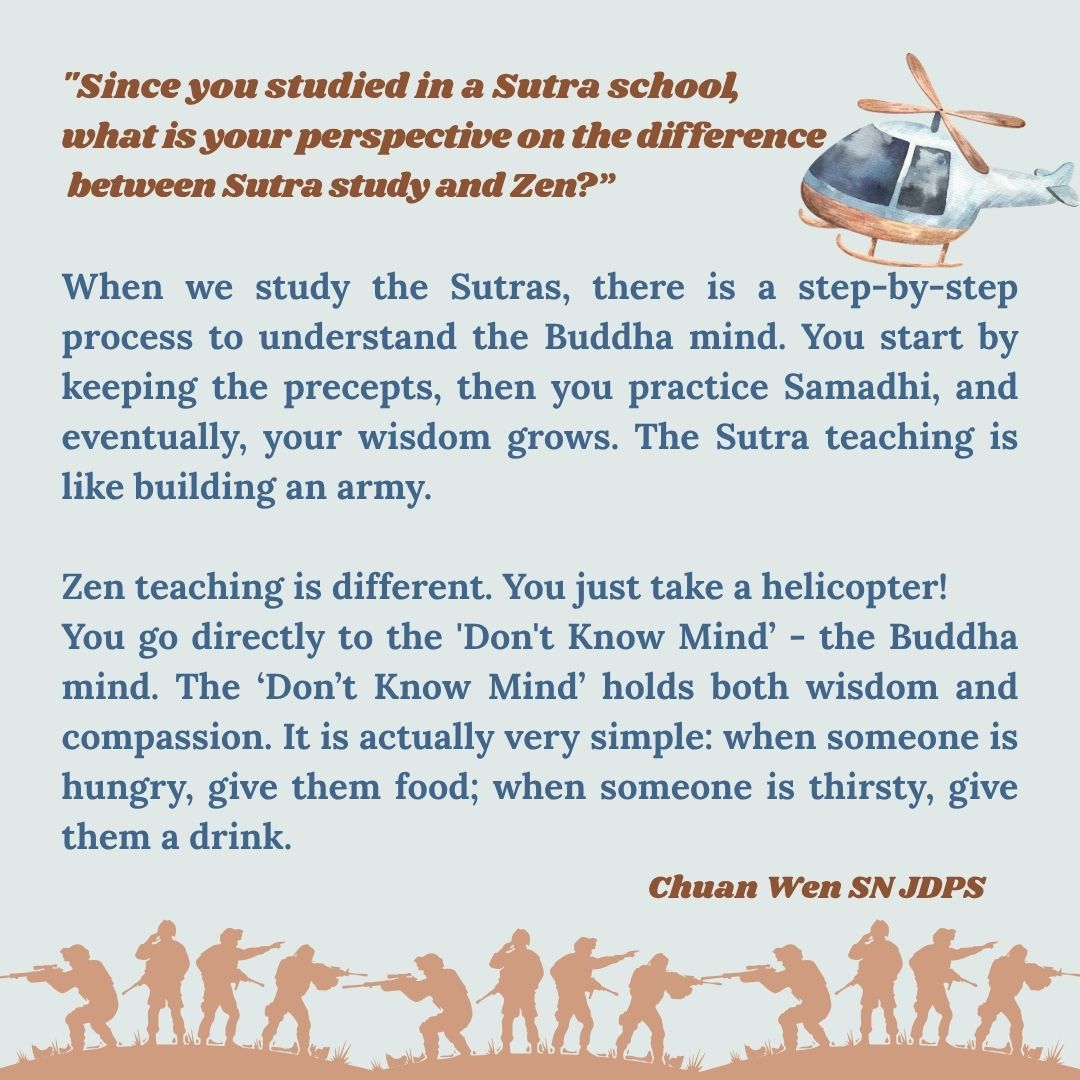
When we study the Sutras, there is a step-by-step process: lesson one, lesson two, lesson three. You start by keeping the precepts, then you practice Samadhi, and eventually, your wisdom grows. You must go step-by-step to understand the Buddha mind.
To understand the difference, think of it like this: Imagine you are attacking a country. The Sutra teaching is like building an army. You march your army to the gate, exert a lot of effort, use a lot of energy and materials to break through, and finally, you reach the king.
Zen teaching is different. You don’t need a huge army. You just use a helicopter! You fly directly inside the country, look down, and see, ‘Oh, the king is there.’ Then you go directly to him.
Which one do you like? It’s up to you, but I like to use the helicopter!
Zen points directly to your mind. The goal of your practice is the ‘Don’t Know Mind.’ This is the Buddha mind.
If you ask about how to grow compassion and joy without the dedicated compassion and mudita practices found in Tibetan Buddhism, I’d say that in Zen, wisdom and compassion come together. When you keep the ‘Don’t Know Mind,’ that point already holds both wisdom and compassion.
Zen Master Seung Sahn always taught us to keep a correct situation, correct relationship, and correct function. That alone is already precept, samadhi, and wisdom. It is actually very simple: when someone is hungry, give them food. When someone is thirsty, give them a drink.
